" /%3E %3C/svg%3E)

Public
16 stops
July 3rd Tokyo/Kyoto Trip
Includes Street Car Racing in Shibuya, Tokyo Disney, Mt. Fuji 5th Station activities and more!
ECreated by Erik Lee
Day 1
Friday, Jul 3

Day 2
Saturday, Jul 4

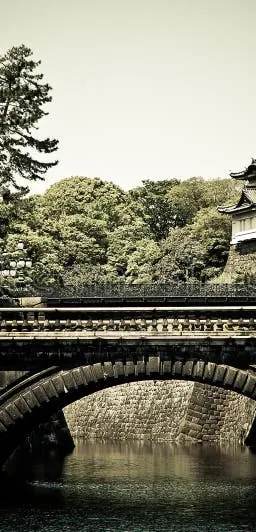
The view of the Nijubashi Bridge and the Imperial Palace behind it peeking out from the greenery is a must-see add-on to any Japan trip!
Added by Erik Lee

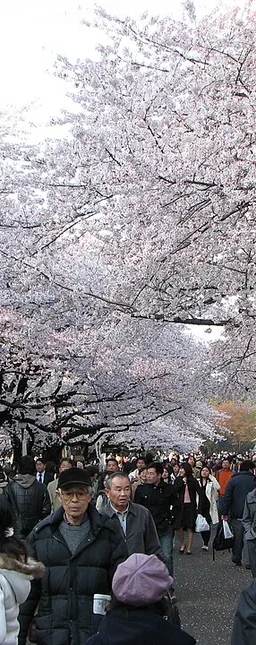
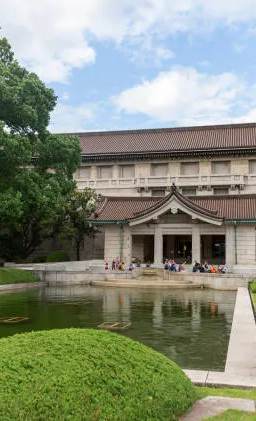
Tokyo National Museum stands at the northern side of Ueno Park and offers the broadest single introduction to Japanese art and archaeology in the country. Founded in 1872, it is Japan’s oldest museum and now preserves cultural property from Japan alongside important works from other parts of Asia. The campus contains several exhibition buildings rather than one continuous gallery, so a visit works best when approached as a choice among collections, periods, and artistic traditions. Begin with the Japanese Gallery in the Honkan for a chronological route through Japanese art, including Buddhist sculpture and painting, ceramics, lacquer, textiles, swords, armor, and works connected with tea, Noh, and Kabuki. The Toyokan expands the view to art and archaeology from China, Korea, Southeast and Central Asia, India, Egypt, and neighboring regions. The Heiseikan includes Japanese archaeology and special exhibition areas, while the Gallery of Hōryūji Treasures presents Buddhist objects originally associated with the Nara temple. The museum’s scale and rotation policy are central to its character. Its holdings exceed 120,000 objects, but conservation needs mean only a selection is displayed at any moment and regular galleries change frequently. This protects sensitive works while rewarding repeat visits. The architecture also helps distinguish each part of the campus: the imposing Honkan frames the Japanese collection, the modern Toyokan organizes Asian material, and the quieter Hōryūji gallery creates a more concentrated setting for early Buddhist art. Choose one or two buildings in advance instead of attempting the entire museum without priorities. First-time visitors usually gain the clearest overview from the Honkan, then can add the Toyokan, archaeology galleries, or a special exhibition according to interest. Labels and thematic displays make the museum useful for newcomers, while the depth of individual categories rewards specialists. Allow time to walk from Ueno Station through the park, check which galleries and objects are currently available, and treat temporary exhibitions as optional additions rather than the only reason to visit.
Added by Erik Lee
Tokyo National Museum stands at the northern side of Ueno Park and offers the broadest single introduction to Japanese art and archaeology in the country. Founded in 1872, it is Japan’s oldest museum and now preserves cultural property from Japan alongside important works from other parts of Asia. The campus contains several exhibition buildings rather than one continuous gallery, so a visit works best when approached as a choice among collections, periods, and artistic traditions. Begin with the Japanese Gallery in the Honkan for a chronological route through Japanese art, including Buddhist sculpture and painting, ceramics, lacquer, textiles, swords, armor, and works connected with tea, Noh, and Kabuki. The Toyokan expands the view to art and archaeology from China, Korea, Southeast and Central Asia, India, Egypt, and neighboring regions. The Heiseikan includes Japanese archaeology and special exhibition areas, while the Gallery of Hōryūji Treasures presents Buddhist objects originally associated with the Nara temple. The museum’s scale and rotation policy are central to its character. Its holdings exceed 120,000 objects, but conservation needs mean only a selection is displayed at any moment and regular galleries change frequently. This protects sensitive works while rewarding repeat visits. The architecture also helps distinguish each part of the campus: the imposing Honkan frames the Japanese collection, the modern Toyokan organizes Asian material, and the quieter Hōryūji gallery creates a more concentrated setting for early Buddhist art. Choose one or two buildings in advance instead of attempting the entire museum without priorities. First-time visitors usually gain the clearest overview from the Honkan, then can add the Toyokan, archaeology galleries, or a special exhibition according to interest. Labels and thematic displays make the museum useful for newcomers, while the depth of individual categories rewards specialists. Allow time to walk from Ueno Station through the park, check which galleries and objects are currently available, and treat temporary exhibitions as optional additions rather than the only reason to visit.
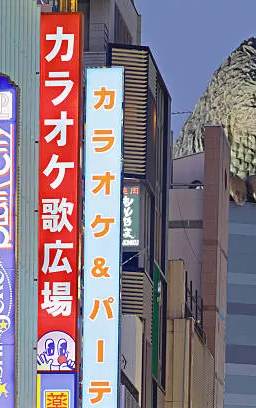
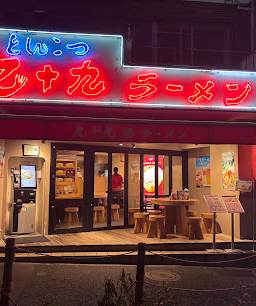
Gouda Pork Bone Ramen or the classic Pork Bone if you don't want any western spin on it! High quality and no-nonsense
Added by Erik Lee
Day 3
Sunday, Jul 5
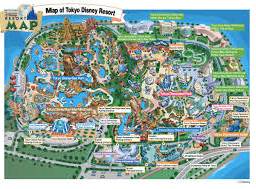
As a first-timer, Tokyo Disneyland blew me away. It’s familiar yet totally unique. The crowds are incredibly polite, and locals dress up in amazing coordinated outfits. Highlights: The Food: Curry popcorn and Green Alien Mochi are must-tries. The Rides: Beauty and the Beast is a trackless masterpiece worth every minute of the wait. It’s cleaner, cheaper, and more magical than the US parks. Download the app and arrive early!
Added by Erik Lee
As a first-timer, Tokyo Disneyland blew me away. It’s familiar yet totally unique. The crowds are incredibly polite, and locals dress up in amazing coordinated outfits. Highlights: The Food: Curry popcorn and Green Alien Mochi are must-tries. The Rides: Beauty and the Beast is a trackless masterpiece worth every minute of the wait. It’s cleaner, cheaper, and more magical than the US parks. Download the app and arrive early!
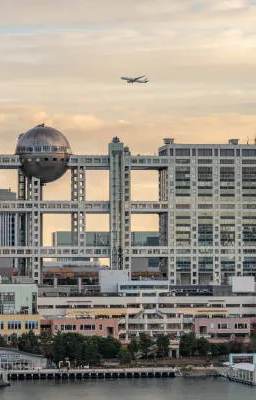
High-Tech artificial island to explore in a day or half-day trip from Tokyo with great food, attractions, and observation decks to look for Mt. Fuji on clear days!
Added by Erik Lee
Day 4
Monday, Jul 6
Day 5
Tuesday, Jul 7
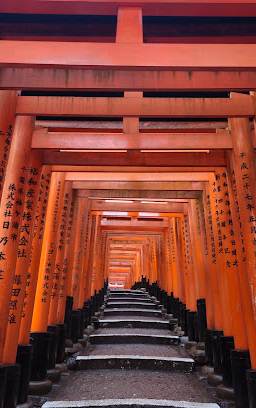
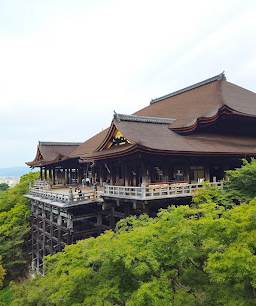
Kiyomizu-dera is a Buddhist temple on the wooded eastern hills of Kyoto, overlooking the city from Higashiyama. Founded in 778 and associated with the Kita-Hossō tradition, it forms part of the UNESCO-listed Historic Monuments of Ancient Kyoto. The long uphill approach through the surrounding historic Kiyomizu and Sannenzaka neighborhood prepares visitors for an extensive complex of gates, halls, sacred water, hillside paths, and broad views rather than a single building. The best-known structure is the Main Hall and its wooden stage, projected dramatically over the steep slope on a framework of tall pillars assembled without nails. The hall enshrines an image of Eleven-Headed, Thousand-Armed Kannon. Below, the Otowa Waterfall divides into streams where visitors may drink using long-handled cups. Other important features include the Niōmon gate, three-story pagoda, Okunoin hall, and paths that reveal the stage from across the valley. What makes Kiyomizu-dera exceptional is the integration of pilgrimage, engineering, landscape, and city geography. The stage was created for worship rather than as a modern observation deck, yet its position makes the relationship between temple and Kyoto immediately legible. Successive reconstructions preserved an architectural form developed over many centuries, while the name Kiyomizu, meaning pure water, connects the complex to the spring that inspired its foundation. This temple suits first-time Kyoto visitors as well as travelers interested in Buddhist practice, historic construction, or urban views. Arrive prepared for sustained slopes, numerous stairs, and a busy pedestrian approach, and allow time to continue well beyond the main stage. Prioritize the Main Hall, Otowa Waterfall, and opposite viewpoints before adding smaller structures. Respect worshippers, avoid obstructing narrow paths, and check current access because preservation work or ceremonies can change circulation. Pairing the temple with nearby Higashiyama streets works naturally, but the commercial approach should not replace time inside the religious complex itself.
Added by Erik Lee
Kiyomizu-dera is a Buddhist temple on the wooded eastern hills of Kyoto, overlooking the city from Higashiyama. Founded in 778 and associated with the Kita-Hossō tradition, it forms part of the UNESCO-listed Historic Monuments of Ancient Kyoto. The long uphill approach through the surrounding historic Kiyomizu and Sannenzaka neighborhood prepares visitors for an extensive complex of gates, halls, sacred water, hillside paths, and broad views rather than a single building. The best-known structure is the Main Hall and its wooden stage, projected dramatically over the steep slope on a framework of tall pillars assembled without nails. The hall enshrines an image of Eleven-Headed, Thousand-Armed Kannon. Below, the Otowa Waterfall divides into streams where visitors may drink using long-handled cups. Other important features include the Niōmon gate, three-story pagoda, Okunoin hall, and paths that reveal the stage from across the valley. What makes Kiyomizu-dera exceptional is the integration of pilgrimage, engineering, landscape, and city geography. The stage was created for worship rather than as a modern observation deck, yet its position makes the relationship between temple and Kyoto immediately legible. Successive reconstructions preserved an architectural form developed over many centuries, while the name Kiyomizu, meaning pure water, connects the complex to the spring that inspired its foundation. This temple suits first-time Kyoto visitors as well as travelers interested in Buddhist practice, historic construction, or urban views. Arrive prepared for sustained slopes, numerous stairs, and a busy pedestrian approach, and allow time to continue well beyond the main stage. Prioritize the Main Hall, Otowa Waterfall, and opposite viewpoints before adding smaller structures. Respect worshippers, avoid obstructing narrow paths, and check current access because preservation work or ceremonies can change circulation. Pairing the temple with nearby Higashiyama streets works naturally, but the commercial approach should not replace time inside the religious complex itself.
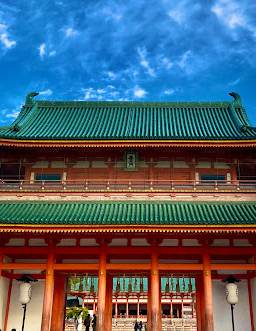
Heian Jingū is a Shinto shrine in Kyoto’s Okazaki district, marked by vermilion buildings and a monumental torii on the approach. It was established in 1895 for the 1,100th anniversary of the founding of Heian-kyō, when Kyoto became the imperial capital. The shrine commemorates Emperor Kanmu, the first emperor of that capital, and Emperor Kōmei, the last to rule before the court moved to Tokyo. The main precinct reinterprets part of the ancient imperial palace complex at a reduced scale. Passing through the Ōtenmon gate reveals a broad courtyard framed by vivid corridors and ceremonial halls. Behind these buildings lies the Shin’en, a sequence of four landscape gardens covering roughly 30,000 square meters. Their ponds, stepping stones, planting, and covered bridge offer a quieter experience than the open courtyard and reflect garden styles associated with different periods of Japanese history. Heian Jingū is distinctive because it is a modern shrine designed to evoke a much older capital. Its creation responded to Kyoto’s economic and psychological decline after the imperial move, turning historical memory into a civic and religious landmark. The architecture is therefore interpretive rather than a surviving Heian-period palace. The gardens add another layer, integrating relocated structures, water, seasonal plants, and carefully composed views that reward slow movement. The shrine suits visitors interested in Kyoto history, Shinto architecture, landscape design, or the cultural institutions clustered around Okazaki. Treat the main precinct and paid garden as separate decisions, allowing additional time if the Shin’en is a priority. The large courtyard is easy to understand quickly, while the gardens require a more measured circuit. Combine the shrine with nearby museums or the canal only if the schedule leaves room for both experiences. Avoid relying on festival dates or seasonal bloom expectations without checking current information, since the shrine’s historical design remains valuable throughout the year.
Added by Erik Lee
Heian Jingū is a Shinto shrine in Kyoto’s Okazaki district, marked by vermilion buildings and a monumental torii on the approach. It was established in 1895 for the 1,100th anniversary of the founding of Heian-kyō, when Kyoto became the imperial capital. The shrine commemorates Emperor Kanmu, the first emperor of that capital, and Emperor Kōmei, the last to rule before the court moved to Tokyo. The main precinct reinterprets part of the ancient imperial palace complex at a reduced scale. Passing through the Ōtenmon gate reveals a broad courtyard framed by vivid corridors and ceremonial halls. Behind these buildings lies the Shin’en, a sequence of four landscape gardens covering roughly 30,000 square meters. Their ponds, stepping stones, planting, and covered bridge offer a quieter experience than the open courtyard and reflect garden styles associated with different periods of Japanese history. Heian Jingū is distinctive because it is a modern shrine designed to evoke a much older capital. Its creation responded to Kyoto’s economic and psychological decline after the imperial move, turning historical memory into a civic and religious landmark. The architecture is therefore interpretive rather than a surviving Heian-period palace. The gardens add another layer, integrating relocated structures, water, seasonal plants, and carefully composed views that reward slow movement. The shrine suits visitors interested in Kyoto history, Shinto architecture, landscape design, or the cultural institutions clustered around Okazaki. Treat the main precinct and paid garden as separate decisions, allowing additional time if the Shin’en is a priority. The large courtyard is easy to understand quickly, while the gardens require a more measured circuit. Combine the shrine with nearby museums or the canal only if the schedule leaves room for both experiences. Avoid relying on festival dates or seasonal bloom expectations without checking current information, since the shrine’s historical design remains valuable throughout the year.
Comments (0)
Sign in to join the conversation on this itinerary.
Loading comments...