The National Art Center, Tokyo
7-22-2 Roppongi, Minato City, Tokyo 106-8558, Japan
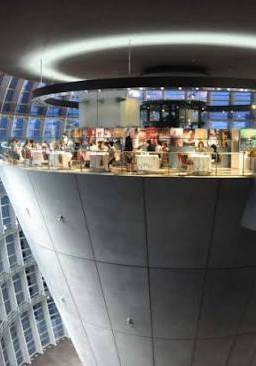
The National Art Center, Tokyo is a large exhibition-focused arts institution in Roppongi, positioned within easy reach of Nogizaka Station and the district’s wider museum circuit. Opened in 2007 as part of Japan’s national museum organization, it differs from a conventional collecting museum because it holds no permanent art collection. Instead, its galleries host changing exhibitions, artist-association shows, educational activity, and access to art information, making every visit dependent on the current program. The building is a major part of the experience. Architect Kisho Kurokawa and Nihon Sekkei designed a sweeping glass curtain wall that bends across the southern side, with a high atrium and cone-shaped forms rising through the lobby. Across roughly 14,000 square meters of exhibition space, twelve galleries can support several shows at once. The center also includes an art library, auditorium, cafés, a restaurant, and a museum shop, so the public areas can reward an architecture-focused stop even before entering a ticketed exhibition. Because there is no permanent display, this is not a museum to approach with a fixed checklist of famous objects. Its value lies in variety: independently organized exhibitions may cover historical art, contemporary practice, design, fashion, architecture, manga, or other visual culture. The spacious circulation areas and distinctive façade give the center a strong identity within Roppongi, while the changing schedule allows repeat visitors to encounter a substantially different institution. That flexibility is precisely what separates it from nearby collection-led museums. Check the exhibition calendar before going and identify which galleries require tickets, since admission arrangements vary by show. Allow additional time if several exhibitions overlap, but do not assume that every gallery will match the same theme or admission. Visitors interested mainly in architecture can prioritize the exterior curve, atrium, and elevated lobby spaces; art-focused visitors should build the stop around one or two current exhibitions. It pairs naturally with other Roppongi art venues, but the scale can justify a dedicated visit when the program is especially relevant.
Also in Minato
Also in Minato
Also in Minato

Local Explorer
The National Art Center, Tokyo is a large exhibition-focused arts institution in Roppongi, positioned within easy reach of Nogizaka Station and the district’s wider museum circuit. Opened in 2007 as part of Japan’s national museum organization, it differs from a conventional collecting museum because it holds no permanent art collection. Instead, its galleries host changing exhibitions, artist-association shows, educational activity, and access to art information, making every visit dependent on the current program. The building is a major part of the experience. Architect Kisho Kurokawa and Nihon Sekkei designed a sweeping glass curtain wall that bends across the southern side, with a high atrium and cone-shaped forms rising through the lobby. Across roughly 14,000 square meters of exhibition space, twelve galleries can support several shows at once. The center also includes an art library, auditorium, cafés, a restaurant, and a museum shop, so the public areas can reward an architecture-focused stop even before entering a ticketed exhibition. Because there is no permanent display, this is not a museum to approach with a fixed checklist of famous objects. Its value lies in variety: independently organized exhibitions may cover historical art, contemporary practice, design, fashion, architecture, manga, or other visual culture. The spacious circulation areas and distinctive façade give the center a strong identity within Roppongi, while the changing schedule allows repeat visitors to encounter a substantially different institution. That flexibility is precisely what separates it from nearby collection-led museums. Check the exhibition calendar before going and identify which galleries require tickets, since admission arrangements vary by show. Allow additional time if several exhibitions overlap, but do not assume that every gallery will match the same theme or admission. Visitors interested mainly in architecture can prioritize the exterior curve, atrium, and elevated lobby spaces; art-focused visitors should build the stop around one or two current exhibitions. It pairs naturally with other Roppongi art venues, but the scale can justify a dedicated visit when the program is especially relevant.
Share personal notes or photos about this spot. You can choose who sees it.
First-hand ratings from the CreateSpot community.
Sign in to add your own rating.
Loading reviews…
No similar spots found.