Exploring Japan's most unique museums


Exploring Japan's most unique museums

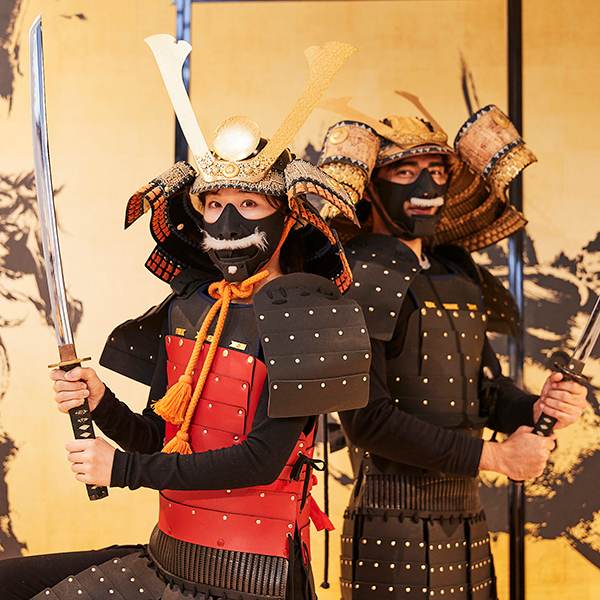
Samurai Ninja Museum Asakusa Tokyo is a guided, activity-led attraction in Nishiasakusa focused on Japan's warrior traditions. It combines displays of armor, swords, and related objects with short participatory experiences, so the visit feels closer to an interpreted cultural program than a self-directed historical museum. Its Asakusa location makes it practical for families and first-time visitors who want an accessible introduction near the district's major sights. The standard experience moves through explanations of samurai and ninja history before shifting into hands-on elements. Visitors can examine armor and weapon displays, try selected costume pieces for photographs, and take part in supervised shuriken-throwing activities. Optional programs expand the practical component with longer ninja or sword-themed sessions. English guidance is a central part of the format, keeping the emphasis on a shared group sequence rather than reading extensive gallery labels alone. What distinguishes this venue is the blend of objects, performance, and participation. The activities give younger visitors and newcomers a physical point of reference for topics that can otherwise remain abstract. At the same time, the presentation is introductory and entertainment-oriented; travelers seeking deep academic treatment of military history may find the scope broad rather than specialized. The best value comes from engaging with the guide and activities, not expecting a large national collection. This museum suits families, mixed-age groups, and visitors who prefer a structured indoor experience to a quiet display hall. It stands at 1-8-13 Nishiasakusa, Taito City, within walking distance of central Asakusa, but it is distinct from similarly named samurai attractions in Shinjuku and Kyoto. Programs, group sizes, and included activities vary by ticket type, so carefully confirm the exact Asakusa option before booking. Comfortable movement matters for the participatory sections, and visitors primarily interested in photographs should still allow time for the guided historical introduction as well.
Added by Alexis Hill
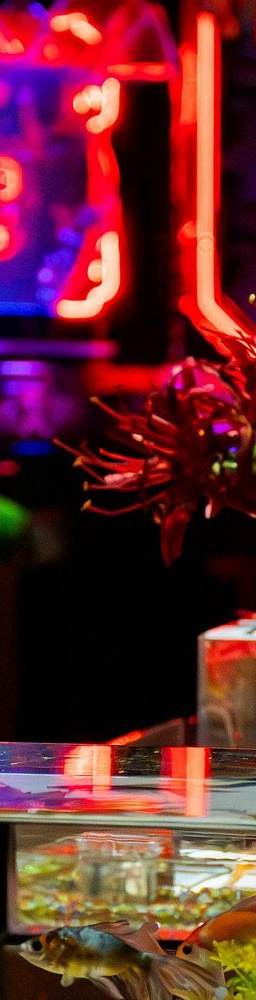
Art Aquarium Museum GINZA is an immersive display of goldfish, light, sound, and Japanese decorative design inside Ginza Mitsukoshi. The attraction treats the aquarium itself as an art medium: living fish move through sculptural vessels while changing color and shadow reshape the surrounding room. It suits visitors seeking a visual indoor experience in central Ginza rather than a conventional zoological aquarium or collection-based art museum. The route passes through tanks and vessels designed as installations, with goldfish varieties viewed from different angles and distances. Lighting, projected patterns, music, and scent are coordinated to establish distinct scenes. Japanese motifs and seasonal references influence the forms and decoration, linking a contemporary immersive format to the long culture of appreciating ornamental goldfish. Temporary features may alter the sequence, so the experience depends as much on staging as on any single tank. Its distinctiveness lies in the balance between living movement and controlled presentation. Goldfish never hold a fixed pose, which means reflections, silhouettes, and group patterns continuously change within structures built for close viewing and photography. The result differs from a standard aquarium organized by habitat or scientific classification. It also differs from a static gallery because the central visual material is active, responsive, and repeated across many variations of vessel, light, and space. The museum works best for visitors comfortable with dim rooms, saturated lighting, and a route designed around atmosphere. It is located at 4-6-16 Ginza in Ginza Mitsukoshi, with reception and same-day entry on the ninth floor of the new building. Ginza Station's A7 exit is the closest approach, while Higashi-ginza and Ginza-itchome also provide practical access. Displays and seasonal programs can change, so check the current exhibition information before visiting. Allow time to observe the fish beyond the most obvious photograph points, where smaller movements reveal how each installation is composed.
Added by Alexis Hill
Tokyo Polytechnic University Suginami Animation Museum is a small museum in Kamiogi that explains Japanese animation as an art, craft, and production system. It is not devoted to one studio or character franchise. Instead, it offers a broad introduction to how animation developed in Japan and how many specialist roles contribute to a finished work, making it useful for both casual viewers and aspiring creators. Permanent displays outline animation history and the production process, from planning and storyboards through drawing, coloring, sound, and post-production. Hands-on areas let visitors experiment with digital animation and voice recording, turning technical stages into approachable activities. A theater screens animated works, while a library holds books and related materials. Recorded creator interviews add firsthand professional perspectives on the decisions behind finished productions. Temporary exhibitions add focused subjects and newer titles without replacing the museum's wider educational purpose. Its strongest feature is this industry-wide perspective. Suginami has long been associated with animation production, and the museum connects that local context to the work of directors, animators, art staff, voice performers, and other contributors. Because it is not tied to a single rights holder, exhibitions can address different creators and periods. Visitors therefore leave with a clearer sense of how moving images are assembled, not only photographs beside familiar characters. The museum best suits anime fans who want production context, families interested in short creative activities, and travelers exploring western Tokyo beyond major commercial districts. It occupies the third floor of Suginami Kaikan at 3-29-5 Kamiogi. Bus connections from Ogikubo, Nishi-Ogikubo, Kami-Igusa, and Shakujii-koen are more practical than treating it as a station-side attraction. Some staff guidance is Japanese-only even when selected visitor materials are available in English, so independent exploration may be necessary. Check temporary closures and exhibition schedules before making the trip, particularly around national holidays.
Added by Alexis Hill

UNKO MUSEUM TOKYO is a colorful indoor entertainment attraction on the second floor of DiverCity Tokyo Plaza in Odaiba. Its subject is unko, the Japanese word for poop, transformed into a deliberately cute visual theme rather than treated as science or natural history. The space suits families, playful groups, and travelers looking for participatory photo sets and short games inside a shopping complex. Visitors move through rooms built around bright sculptural forms, sound, movement, and wordplay. Activities include creating a small poop character, watching a central volcano-style eruption, passing neon versions of the word in several languages, dancing with performers on screen, throwing soft themed objects, and trying compact arcade-style games. Photography is part of the design, with bold colors and simple shapes arranged as backgrounds rather than conventional museum cases. The attraction's distinctiveness comes from applying kawaii design to a subject usually treated as embarrassing. Pastel forms, mascots, multilingual jokes, and exaggerated reactions turn the visit into a shared performance. It is therefore better understood as an interactive amusement space than a collection-based museum. The Tokyo venue is also a permanent branch inside DiverCity, which separates it from earlier temporary versions and other current Unko Museum locations around Japan. Plan it as a light, energetic stop within an Odaiba day rather than an educational museum visit. The entrance is on DiverCity Tokyo Plaza's second floor at 1-1-10 Aomi, Koto City, near Tokyo Teleport Station on the Rinkai Line and Daiba Station on the Yurikamome. The experience relies on participation, posed photographs, and repeated toilet humor, so it best suits visitors comfortable with that tone. Allow enough time to try the games instead of moving only between photographs. Tickets, crowd flow, and individual activities can change, making the official Tokyo venue page the sensible place to confirm current access before arrival.
Added by Alexis Hill
Meguro Parasitological Museum is a private research museum in Shimomeguro devoted entirely to parasites and parasitology. Founded in 1953 by physician Satoru Kamegai, it combines a public exhibition with ongoing scientific, educational, and publishing work. The compact two-floor museum suits visitors interested in biology, medicine, natural history, or unusual specialist collections, but its purpose is explanatory rather than sensational. The first floor introduces the diversity of parasites across different groups of animals through preserved specimens, models, diagrams, and video. Upstairs, the focus shifts to parasites connected with humans, including life cycles, routes of infection, symptoms, and the history of parasitological research in Japan. Around 300 specimens and related materials are displayed. The best-known object is an 8.8-meter tapeworm specimen, whose scale makes an otherwise abstract biological relationship immediately understandable. What separates this museum from a cabinet of curiosities is its research foundation. Displays place striking forms inside clear biological systems, showing how parasites depend on hosts and move through stages of development. The collection supports comparison across species, while the human-focused floor connects laboratory knowledge with public health and medical history. Enlarged wax models and archival materials also show how scientists have developed ways to observe, classify, and teach organisms that are often difficult to see directly. The museum works best as a focused visit for curious adults, older children comfortable with medical specimens, and anyone willing to look closely at preserved material. It stands at 4-1-1 Shimomeguro, about a twelve-minute walk from Meguro Station's west exit, with bus access also available near Otori Shrine. The displays are compact but information-dense, so allow time for labels rather than rushing to the longest specimen. Opening days can shift around holidays, and the institution relies on visitor support, so check its current calendar before setting out, especially during summer and holiday periods.
Added by Alexis Hill
The Ad Museum Tokyo is a museum of advertising and marketing inside Caretta Shiodome in Minato City. Its permanent displays use commercial images and messages to trace changes in Japanese society, making it useful for travelers interested in design, media, business, or everyday cultural history. Rather than treating advertisements only as sales tools, the museum presents them as records of language, technology, aspiration, humor, and public taste. The central exhibition follows Japanese advertising from the Edo period to the present. Printed materials, posters, film, and other formats show how makers responded to new products, audiences, and media. An interactive collection table and audiovisual booth allow visitors to browse beyond the objects placed in cases, while temporary exhibitions examine advertising awards and selected themes. A specialist library extends the visit for anyone who wants to study campaigns, creators, or marketing history in greater depth. Japan has no other museum with this precise institutional focus. The collection numbers roughly 320,000 posters, videos, and related materials, giving the displays a broad base even though only a portion can be shown at once. That scale supports comparisons across eras: an Edo-period commercial notice can sit within the same long story as modern graphic design and moving-image advertising. The result is less a celebration of brands than a compact history of how ideas are packaged and circulated. This museum suits a focused visit in Shiodome, particularly for designers, writers, researchers, and travelers who notice visual communication in daily life. It is located at 1-8-2 Higashi-Shimbashi in Caretta Shiodome, close to Shiodome Station and within walking reach of Shimbashi. Exhibition changeovers and the museum calendar can affect access, so check the current program before going rather than relying on a fixed weekly routine. Allow extra time for the digital archive tools if you want more than a quick pass through the permanent display.
Added by Alexis Hill