
culture
Meguro Parasitological Museum
About this place
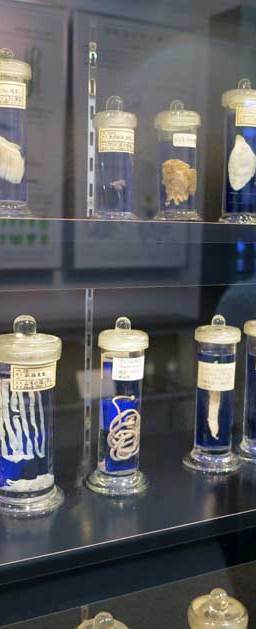
Meguro Parasitological Museum is a private research museum in Shimomeguro devoted entirely to parasites and parasitology. Founded in 1953 by physician Satoru Kamegai, it combines a public exhibition with ongoing scientific, educational, and publishing work. The compact two-floor museum suits visitors interested in biology, medicine, natural history, or unusual specialist collections, but its purpose is explanatory rather than sensational. The first floor introduces the diversity of parasites across different groups of animals through preserved specimens, models, diagrams, and video. Upstairs, the focus shifts to parasites connected with humans, including life cycles, routes of infection, symptoms, and the history of parasitological research in Japan. Around 300 specimens and related materials are displayed. The best-known object is an 8.8-meter tapeworm specimen, whose scale makes an otherwise abstract biological relationship immediately understandable. What separates this museum from a cabinet of curiosities is its research foundation. Displays place striking forms inside clear biological systems, showing how parasites depend on hosts and move through stages of development. The collection supports comparison across species, while the human-focused floor connects laboratory knowledge with public health and medical history. Enlarged wax models and archival materials also show how scientists have developed ways to observe, classify, and teach organisms that are often difficult to see directly. The museum works best as a focused visit for curious adults, older children comfortable with medical specimens, and anyone willing to look closely at preserved material. It stands at 4-1-1 Shimomeguro, about a twelve-minute walk from Meguro Station's west exit, with bus access also available near Otori Shrine. The displays are compact but information-dense, so allow time for labels rather than rushing to the longest specimen. Opening days can shift around holidays, and the institution relies on visitor support, so check its current calendar before setting out, especially during summer and holiday periods.
#parasitology
#science
#museum
Memories
Share personal notes or photos about this spot. You can choose who sees it.
Sign in and save the spot to share a memory.

Reviews
First-hand ratings from the CreateSpot community.
Sign in to add your own rating.
Loading reviews…
Quick Actions
Similar Spots
No similar spots found.